
MET 101 Tip 49: Protect Your Practice and Clients Using MET Criteria
In Tip 49 of our MET 101 series, Dr. Mike discusses one of the most vital safeguards for any Medical Exercise Professional (MedExPRO): the Medical Exercise (ME) criteria. Created in collaboration with physical therapist Dr. Jeffrey Wright, these criteria are strictly designed to ensure that MedExPROs are never put in danger by working with an inappropriate client.
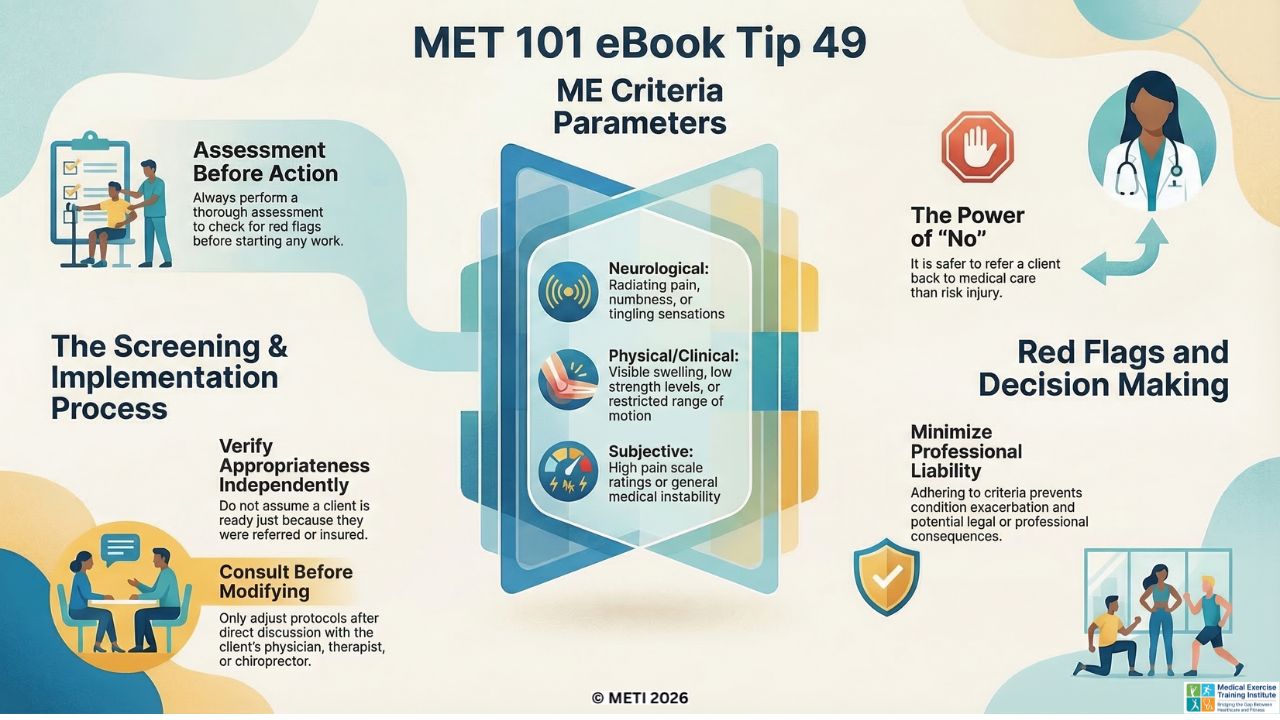
Not Every Client is Ready for Medical Exercise: It is a critical reality that just because a client is referred by a doctor, therapist, or chiropractor—or even if they self-refer because their insurance ran out or they disliked their therapist—it does not automatically mean they are medically appropriate for your services. According to the sources, even licensed physical therapists frequently receive physician referrals for patients who actually need more intensive medical or nursing care to become stable enough to tolerate therapy. As a MedExPRO, you must be equally diligent by performing thorough initial assessments to e...
MET 101 Tip #48 - Why Medical Exercise Protocols Are Non-Negotiable
Welcome back to the ME 101 series! In Tip 48, Dr. Mike tackles a foundational question for any Medical Exercise Professional (MedExPRO): What exactly is a Medical Exercise Training (ME) protocol?
If you want to transition successfully from general fitness to medical exercise, understanding and utilizing protocols is your absolute key to gaining credibility and building referral relationships.
What is an ME Protocol? At its core, a medical exercise training protocol is a defined set of guidelines and procedures used to manage exercise programming and progressions for a specific medical condition. Every aspect of medicine operates on protocols and standards. Therefore, if medical exercise is to be fully embraced by doctors, therapists, and healthcare systems, we must speak their language and utilize protocols.

The 8 Core Components of an ME Protocol: A proper ME protocol is not just a list of exercises. It is a comprehensive, step-by-step process that moves a client from initial ass...
Medical Exercise 101 Tip 41: What Should You Charge for Medical Exercise Services?
In Tip #41 of the MET 101 Tips eBook series, Dr. Mike tackles one of the most frequently asked—and crucial—questions for MedExPROs: “What should I charge for my medical exercise (ME) services?” His answer is rooted in experience, professionalism, and long-term sustainability for your practice.
Dr. Mike’s formula is simple but strategic:
- Find your local personal training rates—both for assessments and sessions.
- Charge 25% to 50% more for ME training sessions.
- Charge at least 50% more for your ME assessments than a standard personal training assessment.
Why the higher price tag? Because as a MedExPRO, you're delivering more than a workout. You’re investing in advanced education, communicating with medical professionals, and designing programs based on functional outcomes—not just fat loss or fitness trends. Your services are a vital extension of the healthcare system, and that added value must be reflected in your pricing.
Dr. Mike also makes a critical distinction between a sc...
MET 101 eBook Tip 19 - Embracing the Scope and Efficacy of MET
Embracing the Scope and Efficacy of Medical Exercise Training
In the latest installment of our Medical Exercise Training (MET) 101 eBook series, "MET 101 Tip 19” provides a summary of the number of MET sessions per week for a few of the most common medical conditions. The video not only underscores the importance of MET but also emphasizes its strategic role in achieving optimal functional levels in clients.
Understanding the MET Framework
Medical Exercise Training is a specialized exercise service designed not as a perpetual intervention but as a temporary measure to enhance a client's functional capacity. The ultimate goal is transitioning clients back to personal or group exercise routines under professional supervision, once they have achieved their optimal level of function.
Guidelines for Session Frequency
• Arthritic Clients: The journey begins with 1-2 sessions per week, focusing on enhancing strength and flexibility, with adjustments made in increased frequency as improvements are ...
Medical Exercise Specialist....When Can You Begin Working with Surgical Clients?
In "MET 101 Ebook Tip 16," the focus shifts to the evolving landscape of medical exercise training, particularly in the context of post-surgical care. This video highlights the increasing necessity for fitness and medical exercise professionals to work closely with clients after surgery, a trend driven by changes in health insurance reimbursement policies. Dr. Mike emphasizes the critical importance of obtaining medical clearance from the operating physician before initiating any exercise program with a post-surgical client. This installment of the MET 101 series sheds light on the procedural and ethical considerations involved in transitioning clients from surgical recovery to physical therapy and eventually to medical exercise training.
Key insights from the video include:
Necessity for Medical Clearance: Before starting physical therapy or medical exercise training, obtaining clearance from the client's surgeon, family physician, or physical therapist is essential.
Timing for Phy...
Medical Exercise Training Includes Connective Tissue - MET 101 Tip 8
This is "MET 101 Ebook Tip 8," Dr. Mike delves into the critical role of strength training within the broader context of medical exercise training (MET). This post highlights the key points discussed in the video, offering valuable insights for both fitness professionals and individuals interested in enhancing their wellness through exercise.
Key Points from MET 101 Tip 8:
Integration of Strength Training: Dr. Mike emphasizes that strength training, while vital, is just one component of MET. It should be integrated with other functional components like proprioception, power, stability, and endurance for a holistic approach.
Clinical Anatomy and Pathology: The understanding clinical anatomy and pathology in developing conditioning programs for clients with medical conditions IS CRITICAL. Dr. Mike outlines the three levels of anatomy, stressing the application of pathology to basic gross anatomy.
Personal Anecdotes: The video includes personal stories, such as Dr. Mike's friendship w...